
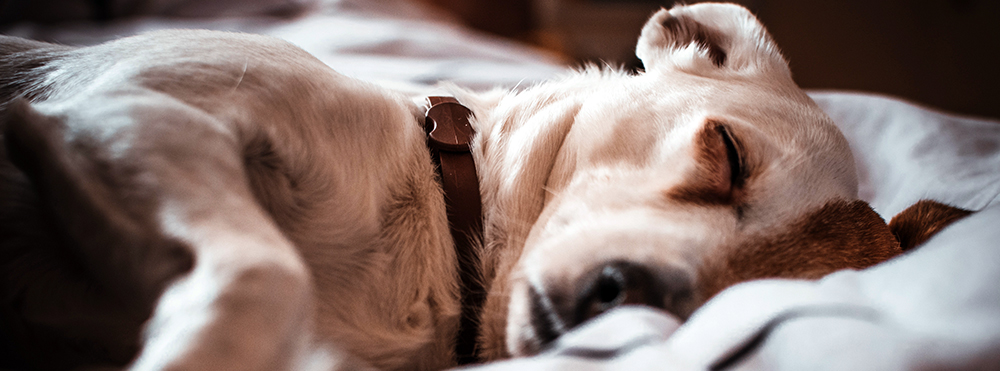
Preventing separation anxiety in dogs
Ahead of this weekend’s World Cup quarter final match, English football fans are hoping that ‘it’s coming home’. But have you stopped to think that your dog may be hoping the same thing – that you’re ‘coming home’ soon?
Dogs are social animals and most enjoy company to being left home alone. If you have a dog you will know that, in reality, being home all the time simply isn’t feasible. So it is important that we help our dogs feel comfortable with being apart from us.
How to help your puppy or new dog get used to being home alone
It is important to teach your dog that being on their own isn’t scary. To do this we need to build up the time they are apart from us very gradually. Some ideas to help are:
Choose an area: First of all decide on the area where your dog will be left when you go out. Make sure that your dog has positive experiences in this area and doesn’t just get put in there when you go out to prevent them associating the area with being abandoned. Make sure your dog has a comfortable bed and water in the area. You could use an area such as a utility room with a stair gate on or a suitably sized crate (both allow your dog to still see and hear you at first). Think of ways in which you can get the dog to love their area; you could feed them their daily food in it and when giving them chews or treats take them to their bed and let them chew it in there so they start to learn that being in their bed is a nice place to be. Leaving an item of clothing that has been recently worn can also help your dog feel more secure.
Background noise: Many dogs will enjoy a low level radio or TV on as background noise; stations with talking on are better than those with continual music.
Slowly slowly: Before you leave your dog for periods of time on their own, make sure you put your dog in the chosen area several times a day with a suitable chew item or their food and gradually build up to leaving the room for longer periods of time – to start with stay in the next room so they can see you, then go out of the room for a minute and so on. Try to go back to your dog whilst it is still chewing or is settled.
Extra help: If your dog already has separation anxiety, such as a rescue dog that you have recently acquired, there are some products you can get to help calm your dog down, such as adaptil. Always speak to your vet if your dog is very distressed and you feel it needs some extra help to adapt to being alone.
Never punish your dog!
Many people believe that if you punish a dog for their bad actions, they will understand what they’ve done wrong and won’t do it again in the future. This simply is not the case. Punishing a dog for being anxious when you go out (such as barking, defecating or chewing things they shouldn’t) is only likely to lead to higher levels of anxiety as they start to also fear a punishment when you return.
Further help
The Blue Cross have further information on how to help a dog with separation anxiety. You may also want to seek professional help. Try looking for a behaviourist trainer on the Association of Pet Behaviour Counsellors website or the Animal Behaviour and Training Council website.


